Certified Pre-Owned vs. Used: What's the Difference Worth?
Table of Contents
Certified Pre-Owned vs. Used: What's the Difference Worth?
Walk any used car lot and you'll see the same vehicle priced two different ways: standard used, and certified pre-owned with a few thousand dollars tacked on. That price gap raises an obvious question. What are you actually paying for, and is it worth it?
What "Certified" Actually Means
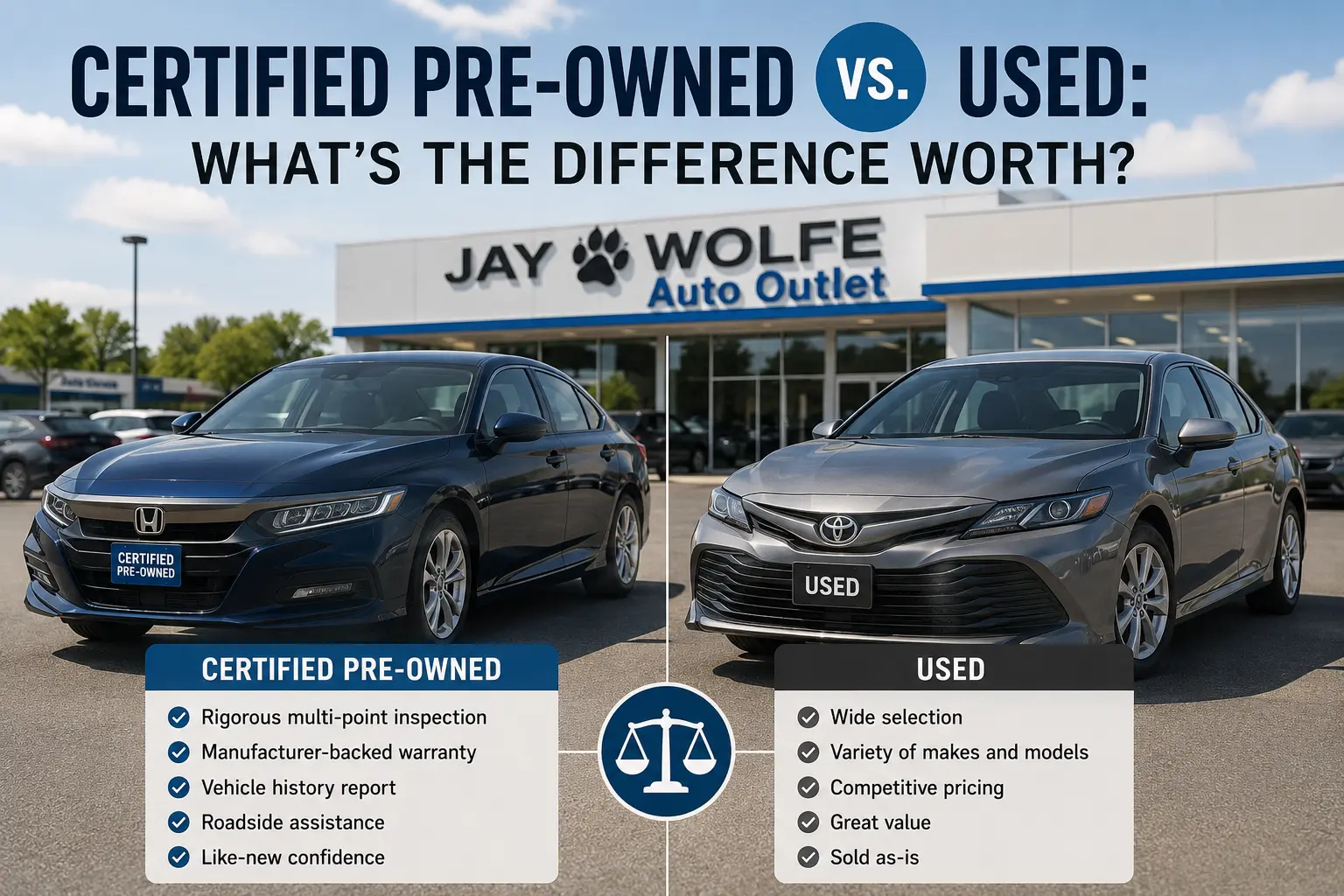
Certified pre-owned isn't a marketing label slapped on a clean-looking vehicle. It's a formal designation that requires a vehicle to pass a detailed, standardized inspection covering dozens of mechanical, safety, and cosmetic checkpoints. Depending on the certifying program, this typically means 100 to 150+ individual inspection points, covering everything from engine and transmission performance to brake condition, suspension components, electrical systems, and interior wear.
Vehicles that don't pass get repaired before certification, or they don't get certified at all. This matters because it removes the guesswork. A standard used vehicle might be perfectly fine, or it might have an issue nobody's caught yet. Certification means someone already went looking.
The Age and Mileage Requirement
Most certification programs also set limits on how old a vehicle can be and how many miles it can have accumulated, typically capping around five to seven years old and under 80,000 to 100,000 miles. This isn't arbitrary. It's designed to ensure certified vehicles still have meaningful useful life ahead of them, not just a clean inspection report on a car that's already lived most of its practical life.
Extended Warranty Coverage
Here's where the value proposition really shows up. Certified pre-owned vehicles typically come with an extended warranty beyond what the vehicle's original factory coverage provided, sometimes an additional year or more of bumper-to-bumper protection, plus extended powertrain coverage. If something goes wrong with a major component after your purchase, you're not immediately facing an out-of-pocket repair bill.
This warranty coverage is arguably the single biggest financial argument for choosing certified over standard used. A single major repair, a transmission issue or electrical fault, can easily cost more than the entire price premium you paid for certification in the first place.
Vehicle History Documentation
Certified vehicles typically come with a clean vehicle history report as a baseline requirement. Salvage titles, flood damage, or significant accident history generally disqualify a vehicle from certification entirely. While you should always check vehicle history regardless of certification status, CPO vehicles start from a stronger baseline.
When Standard Used Makes More Sense
Certification isn't always worth the premium. If you're buying an older vehicle that wouldn't qualify for CPO status anyway due to age or mileage, the comparison doesn't apply. If you're working with a documented, transparent seller who provides complete service records and you've had an independent inspection done yourself, you might be getting comparable confidence without the certification markup.
Budget matters too. If the certified premium pushes a purchase outside your comfortable budget, a well-inspected standard used vehicle with a solid history might be the smarter financial move, especially if you're planning to have your own trusted mechanic inspect it before buying.
Making the Decision
Ask yourself what you're actually paying for: peace of mind through documented inspection and extended warranty coverage, or the vehicle itself. If warranty protection and inspection documentation matter to you, particularly for a vehicle you're financing long-term, certified pre-owned often justifies its cost. If you're a confident, hands-on buyer who does your own diligence and prioritizes the lowest possible price, standard used remains a perfectly reasonable path.
Not sure whether certified pre-owned fits your budget and priorities? Visit Jay Wolfe Auto Outlet and our team will walk you through the specific coverage and inspection details on any vehicle you're considering.